


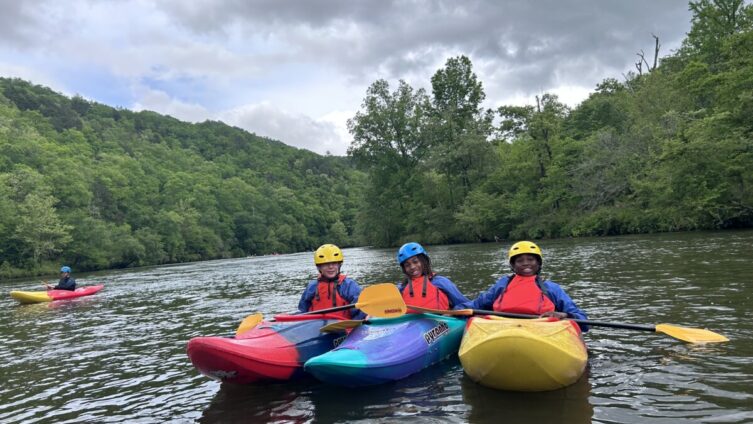
Through a thoughtfully designed Outdoor Education Program, students at The Children’s School take what they’re studying and experience it in the real world, building both academic understanding and essential life skills along the way.
A key tool behind this work is the Outdoor Education Curriculum Map, which offers families a clear, grade-by-grade view of how each experience builds over time.
Designed with purpose
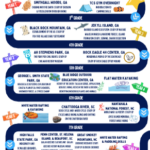
TCS’s Outdoor Education Curriculum Map outlines the progression of trips beginning in third grade, with two experiences each year that are intentionally connected to classroom learning.
“The purpose of the outdoor education progression is to allow for families, students, and teachers to understand how the outdoor education experience builds upon itself from year to year, and allows students to understand learning both in and out of the classroom,” said Director of Curriculum Jen Tatasciore. “Students can take the content that they are studying and go into the world, have an experiential learning moment with the information, and tie it to what’s happening in the world around us.”
The map highlights the academic unit students are studying and shows how the trip extends that learning in a real-world setting, making the connection between classroom and outdoor experience both visible and intentional.
From knowledge to understanding
Rather than passively learning concepts, students actively apply them.
“Teachers look at the trips through the lens of the location and how it ties to a science or social studies unit they’ve studied in the classroom,” said Jen. “Teachers are thinking about where they can bring the students in order to expand upon this knowledge and make the learning hands-on in an impactful way that allows students to retain knowledge as opposed to just passively learning.”
Building independence and resilience
The Curriculum Map also reflects the intentional development of social-emotional skills across grade levels. As students progress, they take on increasing responsibility during trips.
Those experiences aren’t always easy, and that’s by design.
“We’re putting students in situations that aren’t perfect,” she says. “It might be cold, it might be raining, something might go wrong. But that’s where they build resilience. They learn they can get through something challenging and come out the other side feeling proud.”
A different kind of outdoor education
While many schools offer outdoor experiences, TCS stands apart in its emphasis on student ownership and connection to curriculum.
“Our outdoor education program is unique because it allows students to learn real-life skills and take on more autonomy in terms of how they are working with the camping gear, cooking the meals, and learning about the environment they’re in,” said Jen. “It’s giving the children a chance to really thrive in an environment that is different from the classroom. Other schools focus on creating spaces for students to be outside, but they are guided by adults. Our program provides students the opportunity to take leadership, really own the experience, and bring their full selves to the space to identify their own areas of expertise.”
The map also shows how the program evolves over time. Older students build on earlier skills through advanced experiences like a water progression that takes students from flatwater kayaking to whitewater rafting.
Preparing students for what’s next
By making the progression visible, the Outdoor Education Curriculum Map helps families see how each experience prepares students for the next stage, both academically and socially-emotionally.
“We focus on creating leaders and our outdoor education program allows for our students to realize their full potential by exploring those different aspects of leadership. We do this all while tying to our DEIJ philosophy by understanding cultural aspects of the world we live in and honoring the people who have lived and continue to live on those lands when visiting the spaces around us,” said Jen. “That is something that ensures that we are living up to our beliefs as a school.”
What success looks like
For Jen, success is easy to spot.
“It’s when students come back from a trip talking nonstop about what they experienced, especially the challenges,” she says. “They’re smiling, they’re energized, and they’re proud of what they’ve accomplished.”
At its core, TCS’s Outdoor Education Program reflects a simple but powerful belief: the best learning happens when students can connect knowledge to experience. With the Outdoor Education Curriculum Map as a guide, that journey is both intentional and transformative, helping students not only understand the world, but confidently step into it.


