


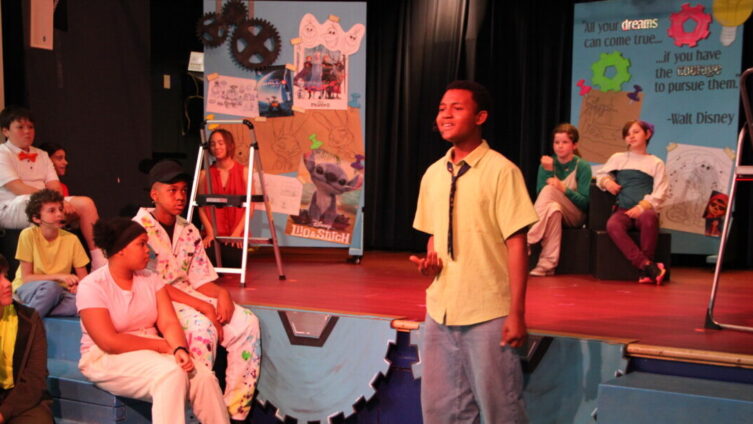
As Blake prepares to graduate from The Children’s School, I find myself reflecting on the journey that began when he first walked through its doors as a first grader. By that time, he was already reading with confidence. What we were searching for was something deeper: a school that would nurture not just his academic ability, but his curiosity, creativity, voice, and sense of connection to the world around him.
What we found at The Children’s School was an environment where learning was not something delivered to students, but something they were invited to participate in fully. In first grade, Blake was writing first-person narratives and working alongside his art teacher, Kelley, to illustrate his stories through watercolor. He was not simply learning how to write; he was learning how to express himself. Math came to life through experiences like making smoothies to understand fractions, transforming abstract concepts into something tangible and collaborative.
During COVID, when Blake was learning remotely while many of his classmates were in person, belonging remained intentional. His teacher created a role for him as the class weather anchor, inviting him to research and deliver daily weather reports to his peers. What could have been a moment of disconnection became one of visibility and contribution. He was not on the margins of the classroom; he remained part of its rhythm and life. That experience marked the beginning of his research skills and reinforced something even more important: that he was seen, included, and valued, regardless of circumstance.
Just as importantly, he was learning within a community where curiosity was actively nurtured and meaningfully engaged. Belonging was not assumed; it was cultivated. He was known by his teachers. He was trusted by his peers. He was encouraged to contribute.
Because he felt known, he was willing to take risks. Because he felt safe, he was willing to try, to fail, to succeed, and to try again. Because he felt valued, he began to trust his own voice and see himself as someone capable of growth.
Beginning in fourth grade, Outdoor Education expanded his classroom beyond four walls. Through biannual trips, he developed an understanding of environmental systems and the interconnectedness between people and the natural world. He learned not only scientific concepts, but how systems influence one another and how individuals exist within those systems.
As he grew older, he learned how to research a position, write a persuasive piece, and stand on the steps of a mock Capitol to defend what he believed in. He discovered that his voice had both power and responsibility, and that learning could extend beyond understanding into advocacy.
His love of photography became one of the clearest expressions of that growth. What began as a personal interest became a way for him to connect with others and contribute to his community. He is often sought out to document shared experiences, trusted to capture moments that matter. Photography gave him a way to participate, to be both observer and storyteller, and in doing so, deepened his sense of belonging.
Over the past eight years, we have watched him grow into a young person who is not only academically prepared, but emotionally grounded and socially aware. He understands how to engage with ideas, how to communicate across differences, and how to build meaningful relationships. He has learned that learning is not about perfection, but about participation, persistence, and growth.
As he prepares to graduate, we see a young person who knows himself more clearly. He is eager for what comes next, not because he has been taught to chase achievement, but because he has developed the confidence to engage with the unknown. He understands that belonging is not something he has to earn. It is something he carries with him.
The Children’s School did more than educate Blake. It gave him the foundation of belonging that made his growth possible. It prepared him not just for high school, but for becoming. Becoming a learner, a contributor, and a person who knows he has a place in the world.
Fabienne Lauture
Parent, Class of 2026
Beyond Academics: A Parent Perspective on the TCS Experience
What does belonging look like in practice at TCS?
Belonging at TCS looks like children being known not just for how they are in the moment, but with grace and flexibility for how they are developing, not just academically, but as whole people. It looks like teachers noticing a child’s interests and creating space for them to contribute meaningfully to the community. Like when Diana Bubes, learned that Blake loved music and he became the 3rd Grade class DJ or in 6th grade when Julia engaged Blake in his love of photography and assigned him the responsibility of documenting the 6th grade camping trip. It looks like peers learning to value one another’s differences rather than conform to sameness. At TCS, belonging was not performative or conditional. It was woven into the culture through relationships, trust, collaboration, and the belief that every child has something to offer.
What experiences at TCS most shaped his confidence and willingness to take risks?
Outdoor Education played a significant role because it consistently pushed students beyond their comfort zones while building trust and interdependence. Performing arts also helped him grow tremendously. Watching him move from a child who was once hesitant to perform into someone willing to take on solos and embrace the stage reflected real growth in confidence. TCS created an environment where trying something new was valued as much as succeeding. And, now he is excited to dig deeper into being a performer and find connection through his passion for music and the arts.
How did TCS balance academic challenge with nurturing Blake as a whole child?
TCS challenged students intellectually while recognizing that children are still developing emotionally, socially, and personally. The expectation was not perfection, but engagement. Blake learned how to think critically, research historical events and connect them to current events analyzing their impact and exploring solutions, communicate clearly, and advocate thoughtfully, but he also learned empathy, collaboration, reflection, and responsibility. The school does not treat academics and humanity as separate things.
What skills or habits do you feel most prepared him for high school and beyond?
TCS helped him become an independent thinker and a collaborative learner. He learned how to communicate across differences, advocate for himself respectfully, manage long-term projects, work within groups and engage thoughtfully with ideas. Just as importantly, he learned persistence, adaptability, and how to ask for help when needed. Those habits will matter far beyond high school.
What would you say to a family considering TCS for their child?
TCS sees children as whole people. It is a place where intellectual growth, emotional development, creativity, and community are treated as interconnected rather than separate priorities. If you want your child to be deeply known, challenged thoughtfully, and encouraged to become fully themselves, TCS offers that foundation.
In one sentence: what makes TCS different?
TCS understands that children thrive when they are deeply known, genuinely valued, and empowered to grow into themselves with confidence and purpose.
How did you see Blake’s sense of belonging evolve over time?
In the early years, belonging looked like safety and connection. Over time, it evolved into confidence, contribution, and self-awareness. As Blake grew, he stopped simply participating in the community and began shaping it. Whether through Outdoor Education, performance opportunities, advocacy projects, or photography, he developed a stronger sense of who he was and how he could engage with others. By middle school, belonging was no longer something he was seeking externally. It had become part of how he moved through the school, home, and beyond.
Why do you believe belonging is essential to a child’s growth?
I believe that children grow best when they feel emotionally safe enough to take risks. Belonging creates the conditions for curiosity, resilience, and confidence to emerge. When a child feels seen and valued, they are more willing to ask questions, try new things, recover from setbacks, and trust their own voice. Belonging is not separate from learning. It is foundational to it.
When did you first notice Blake beginning to trust his own voice?
I began to notice it most clearly during middle school, particularly through projects that required students to research issues, form perspectives, and publicly defend their thinking. Watching him stand on the steps of a mock Capitol and advocate for a position he believed in was powerful. But it also showed up in quieter ways: speaking up in conversations, expressing his ideas with greater clarity, and becoming more comfortable contributing authentically in group settings.
How did Blake’s relationships with his teachers, peers, or the broader community impact his experience?
Those relationships shaped nearly every aspect of his experience. His teachers saw him deeply and encouraged growth without trying to force conformity. His peers became collaborators, supporters, and trusted friends. The broader community reinforced the idea that students are contributors, not passive participants. Being surrounded by adults and peers who genuinely valued his perspective strengthened both his confidence and his sense of responsibility to others.
What did it mean to your family to feel “known” at TCS?
It meant we never felt like we had to explain who Blake was in order for people to understand him. His strengths, challenges, interests, and personality were recognized and valued by the people teaching and guiding him each day. That level of care created trust, and that trust allowed us to partner more fully with the school in supporting his growth.
As Blake graduates, what makes you most proud?
I am most proud of the person he is becoming. He is thoughtful, growth oriented, curious, and kind. He knows how to build relationships, engage respectfully with others, and approach new experiences with openness. Watching him develop both self-awareness, vulnerability, and compassion has been really rewarding to witness.
What do you hope he carries with him from his time at TCS?
I hope he carries the understanding that his voice matters and that growth often comes through discomfort, vulnerability, and connection. I hope he remembers that learning is continuous, that there is always more to understand about the world and about the experiences of others. Most importantly, I hope he carries a deep sense of belonging within himself, knowing he has a place in every room, at every table, and that he is capable of rising to the expectations he sets for himself.


